

EMULATION / DEVELOPMENT UPDATE
Building a multispecies
brain emulation platform
Brain structure, neural computation and behavior—in one experimental framework.
Uploading is developing a multispecies emulation platform. Our work connects anatomical data to neural computation, articulated bodies and interactive worlds through a shared set of interfaces. Here we present our current work with flies and mice, the infrastructure they share, and the research steps toward more complex mammalian systems.
THE INTERACTIVE PLAYGROUND
Step into the animal’s world
Place a cue, move it, and follow the animal’s response from its own perspective. We are developing the browser playground around this way of exploring sensory input, neural activity and embodied behavior.
Explore the scene in the recording today. Live browser access is still being configured.
View the game preview ↗MOUSE / WORK IN PROGRESS
Mouse imaging and connectome reconstruction in progress
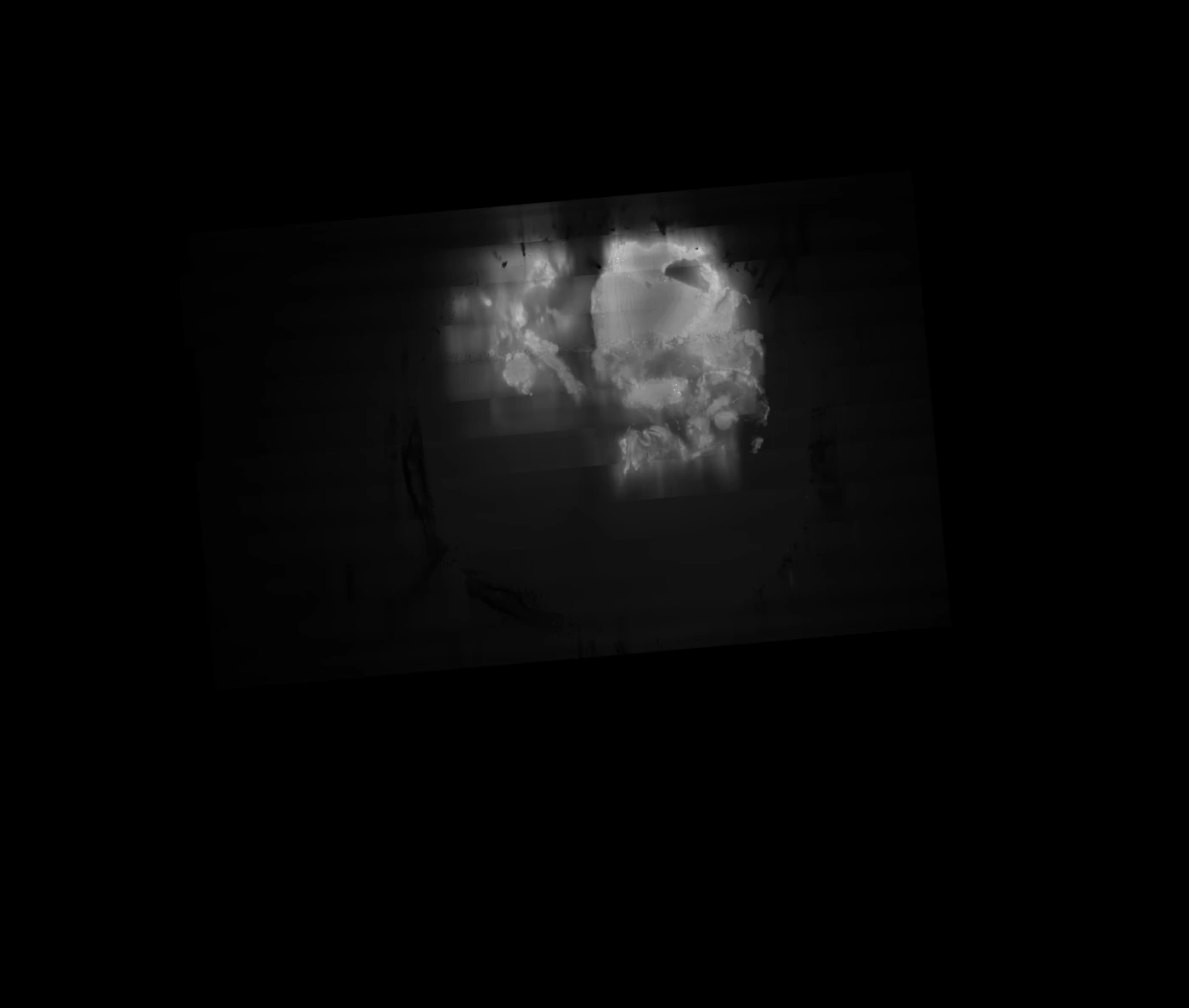
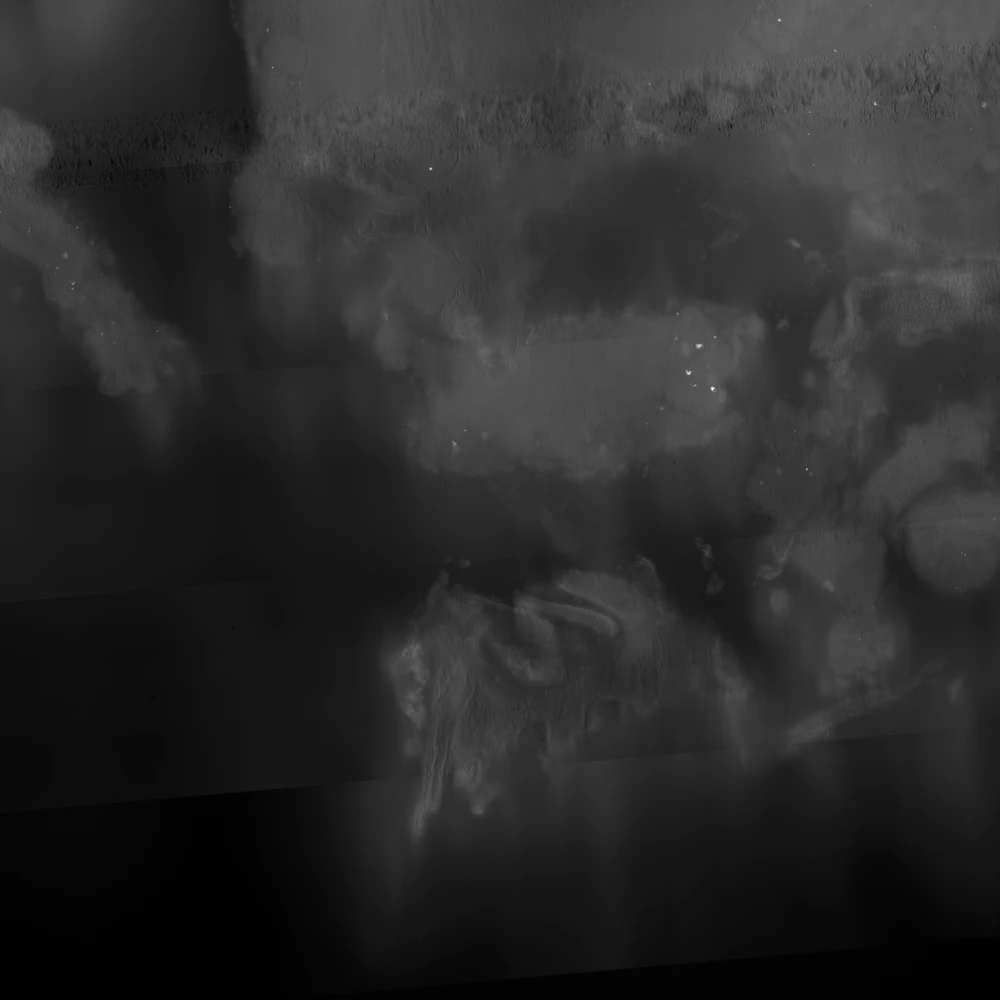
We are attempting to reconstruct a mouse connectome from approximately 32 TB of fMOST mouse-head imaging data, described as 300 nm. Reconstruction is exploratory, and its accuracy remains unverified.
We plan to share an initial reconstruction soon, with its limitations and validation status. The images below show input data and enlarged details; they do not establish neural connections or demonstrate a completed, validated connectome. The 300 nm figure is a reported dataset specification, not a claim of verified resolution in all three dimensions.
The film shows authored sequences of investigating, handling and transporting material. Movement research provides references for skeletal kinematics and behavioral sequences [7][8][9]. The animation and illustrative activity view are developed separately from the tissue data.
From anatomical structure to testable behavior
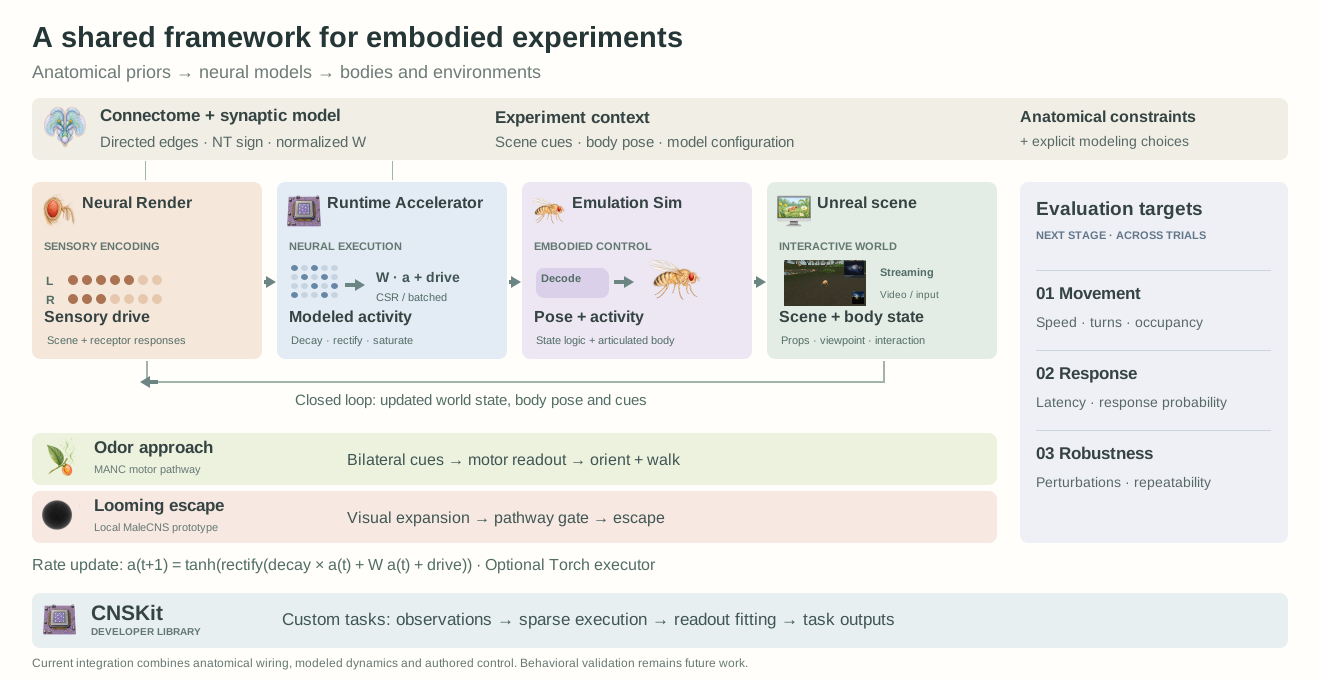
Connectome data constrain the connections represented in a model. Neural dynamics and sensorimotor interfaces determine how model activity affects a simulated body and responds to its environment. We aim to make these modeling choices explicit, composable and testable.
Separating anatomical structure, neural execution and embodied control lets us change a stimulus or model component while retaining the surrounding task. We can then inspect the resulting activity and behavior. Our research aim is to test which structural and computational assumptions explain responses across environments and, eventually, species.
FRUIT FLY / CURRENT INTEGRATION
Connectome-based fruit-fly simulation
For the fly, grounding begins with identifiable anatomical wiring. The current bridge brings together a pathway-targeted MaleCNS escape calculation and a separate MANC motor-readout pathway [1][2]. They have different scopes; the recorded demonstration is not a claim that the entire MaleCNS graph independently controls every action on screen.
The escape calculation uses the implemented LPLC2-to-DNp01 pathway to connect a looming input with an escape gate. The motor path uses a MANC top-500 subgraph with a fitted motor-neuron readout. Its leaky-rate dynamics and task mapping are computational choices applied to anatomical connectivity, rather than measured neural activity replayed from an animal.
Inputs are explicit too. Receptor-inspired encodings and the behavior controller translate supported scene cues into model inputs and action requests. Different cues need different mappings; a stimulus appearing in the interface does not, by itself, establish a validated sensory pathway.
BEHAVIORAL GROUNDING
Comparing behavior across trials
Anatomical grounding and behavioral grounding answer different questions. The connection map constrains model structure. Behavioral evaluation asks whether simulated movement statistics match those measured in animals under comparable conditions.
We plan to compare distributions across repeated trials: walking speed, pause duration, turning angles, spatial occupancy, approach success and escape probability. We also plan to compare the model with simpler controllers and examine how responses change when cues are removed or modeled circuits are perturbed. The stimulus protocol, uncertainty and failure cases need to be part of the comparison.
For more complex interactions, we also plan to compare action sequences: orienting, approaching, making contact, adjusting after resistance and completing an action. Existing movement research provides tools for studying such sequences [7][9]. This evaluation program is a next step, rather than a completed validation result.
IMPLEMENTATION
Interfaces that make the system reusable
Neural Render expresses scene and body observations through receptor response modules. The current bridge consumes sensory summaries and egocentric cues, then maps them into neural drive.
Runtime Accelerator advances sparse leaky-rate dynamics using sparse matrix operations in compressed sparse row (CSR) format, state decay, rectification and saturation, with vector and batched execution. A Torch backend is available for separate experiments.
Emulation Sim decodes runtime state into turn and speed signals and combines them with explicit behavior logic. MuJoCo supplies articulated geometry; the bridge carries pose and activity into Unreal Engine and returns updated scene information to sensing. Keeping the numerical model separate from embodiment and presentation allows each layer to evolve without rewriting the entire experiment.
Pixel Streaming transports the Unreal Engine video and user input between a hosted scene and the browser. Remote frame rate, latency and interaction reliability still need to be measured on the cloud deployment.
Body and motion
Our fly’s leg transforms come from the MuJoCo bridge, using the FlyGym / NeuroMechFly simulation foundation [3].
Unreal adds materials, lighting, framing and authored gestures. These choices make the animal’s actions easier to follow; they do not demonstrate learned behavior.
Neural activity visualization
A dense activity display can obscure the event it is meant to explain. The display therefore emphasizes selected changes and holds visible activity long enough to follow beside the animal’s response.
The fly visualization displays processed model activity; the mouse visualization is illustrative. Brightness and persistence are display choices, not measurements of spiking or axonal conduction.
BUILD YOUR OWN EXPERIMENT
CNSKit
CNSKit gives researchers and developers a local-first Python library for custom-task inference and readout training with MaleCNS. It maps observations to inputs, advances a sparse model and fits a task readout while keeping the graph fixed. Experiments can use a synthetic example or explicitly prepared anatomical data; end-to-end training of the connectome-based model remains future work.
Source release is being prepared; repository access and licensing remain pending.
PLATFORM / RESEARCH ROADMAP
Toward multispecies brain emulation
Across species, we aim to reuse interfaces for anatomical data, sensory inputs, neural execution, body simulation and evaluation. Each species still needs its own anatomy, dynamics and behavioral tasks. We do not assume that a connectome, controller or fitted readout can be transferred unchanged between species.
Fruit fly · current integration
The fly provides our first integrated demonstrator. The immediate work is to make task interfaces reproducible and evaluate responses across controlled trials.
Mouse · work in progress
We are attempting connectome reconstruction from the fMOST mouse-head imaging data and plan to share preliminary results soon. Accuracy and completeness remain to be evaluated; no validated mouse connectome is presented here. Connecting a reconstruction to the controller remains a research step. The current mouse film uses authored motion and an illustrative brain display, developed separately from this reconstruction effort.
More complex mammals · longer-term direction
We plan to extend the platform to more complex mammalian systems. Progress will depend on suitable data coverage, tractable neural models, species-specific bodies and sensory interfaces, and quantitative behavioral evaluation.
Our long-term goal is a general-purpose multispecies emulation platform: reusable infrastructure for experiments that bring neural computation into a body and an environment.
SOURCES & FURTHER READING
References
Anatomical sources, simulation foundations, and related modeling research. These publications do not validate the behavior or activity shown in our recordings.
- Sexual dimorphism in the complete Drosophila male central nervous system connectome. Berg et al. (2026). Cell.MaleCNS anatomical resource. Dataset portal.
- A connectome of the male Drosophila ventral nerve cord. Takemura et al. (2024). eLife.MANC anatomy; distinct from whole-CNS MaleCNS.
- NeuroMechFly v2: simulating embodied sensorimotor control in adult Drosophila. Wang-Chen et al. (2024). Nature Methods.FlyGym / embodied simulation foundation.
- The Allen Mouse Brain Common Coordinate Framework: A 3D Reference Atlas. Wang et al. (2020). Cell.Mouse spatial atlas used for the illustrative brain view.
- A Drosophila computational brain model reveals sensorimotor processing. Shiu et al. (2024). Nature.Related sensorimotor modeling on a different dataset.
- Connectome-constrained networks predict neural activity across the fly visual system. Lappalainen et al. (2024). Nature.Task-optimized modeling of the fly visual system.
- Spontaneous behaviour is structured by reinforcement without explicit reward. Markowitz et al. (2023). Nature.Behavioral sequence structure.
- Estimation of skeletal kinematics in freely moving rodents. Monsees et al. (2022). Nature Methods.Rodent skeletal reconstruction and joint constraints.
- Keypoint-MoSeq: parsing behavior by linking point tracking to pose dynamics. Weinreb et al. (2024). Nature Methods.Pose dynamics and segmentation; prospective evaluation reference.